
Quick decision
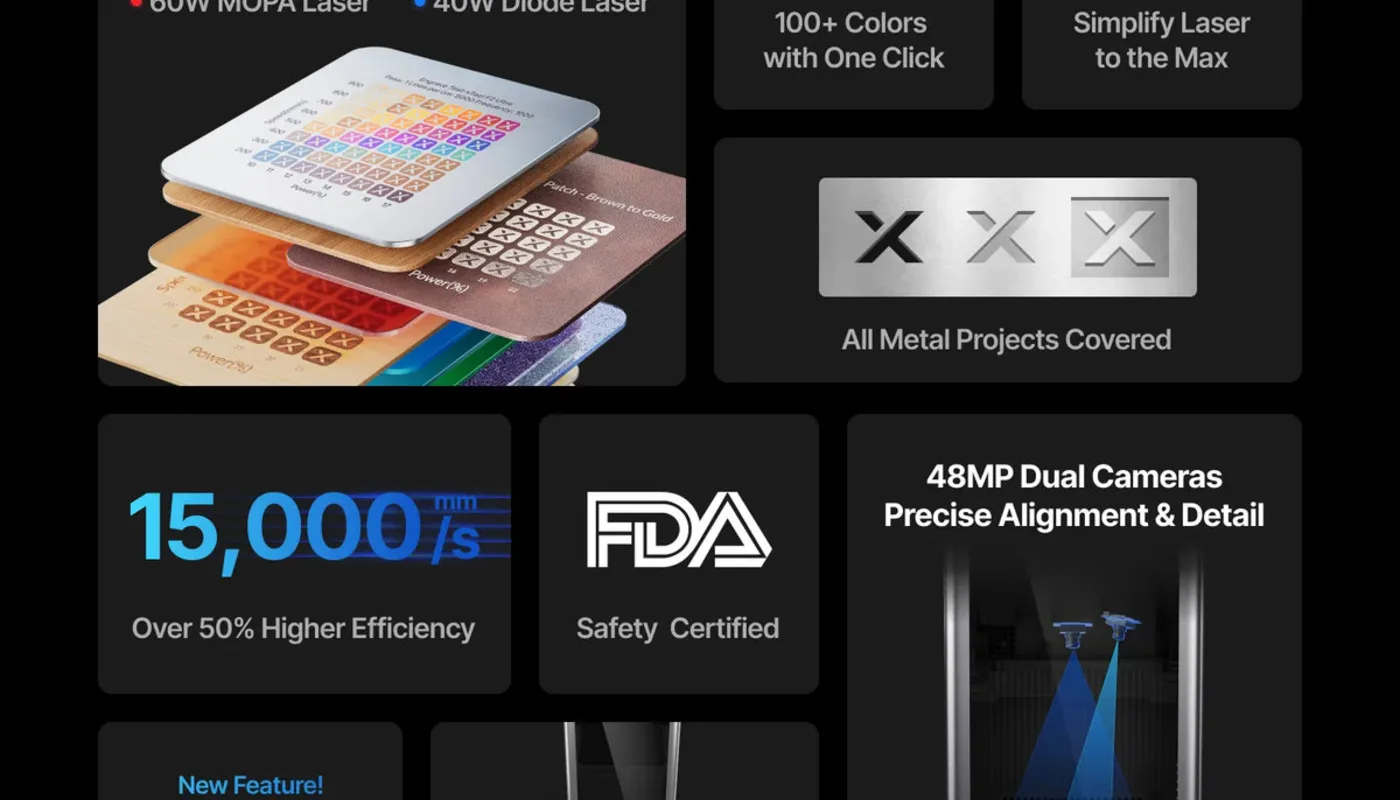
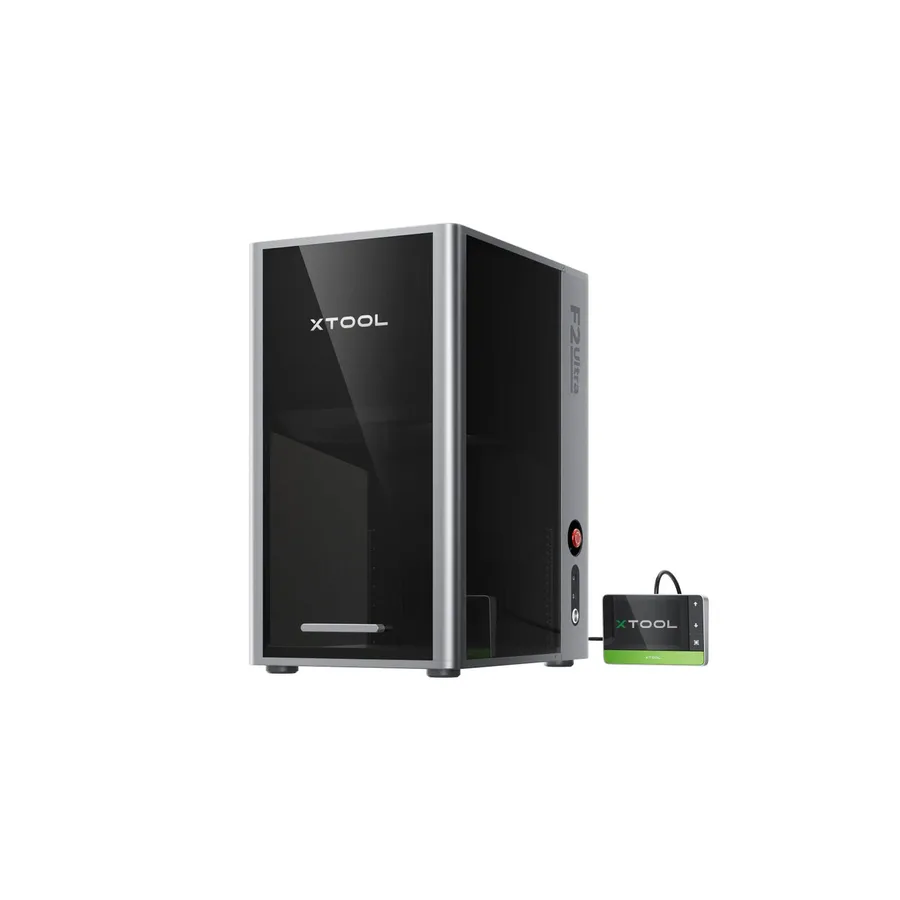
The F2 Ultra makes sense when one workspace repeatedly needs metal marking from a 60 W MOPA fiber laser and non-metal engraving from a 40 W diode laser. A single-purpose shop may get better value from a simpler machine optimized for its dominant material.
Fiber-laser work
MOPA fiber systems are designed for marking compatible metals and can offer more control over pulse behavior than a basic fiber source. Exact results depend on alloy, coating, focus and settings; test on scrap and do not assume every metal will produce the same color or contrast.
Diode-laser work
The diode laser broadens the system toward wood, dark acrylic, leather and other compatible materials. Transparent, reflective, PVC-containing or unknown materials require particular caution and may be unsuitable. Consult authoritative material guidance before processing.
Area and throughput
xTool lists a 220 × 220 mm working area and speeds up to 15,000 mm/s. Production throughput still includes loading, focusing, camera alignment, smoke extraction, testing and unloading, not only the head's maximum movement speed.
Safety and ventilation
The F2 Ultra is listed as a Class 4 laser system. Use the required enclosure and protective measures, manage fumes with suitable extraction, keep a fire watch and never process a material whose composition is uncertain.
Bottom line
Choose the F2 Ultra for varied metal and non-metal jobs that can keep both laser sources productive. If most work is one material family or larger than its bed, compare a dedicated system before paying for dual-laser flexibility.
Scenario shortlist
Order reflects this guide's use-case discussion, not a laboratory performance score.
Sources
Affiliate disclosure
We may earn a commission from a qualifying purchase made through an enabled merchant link, at no additional cost to the reader.