
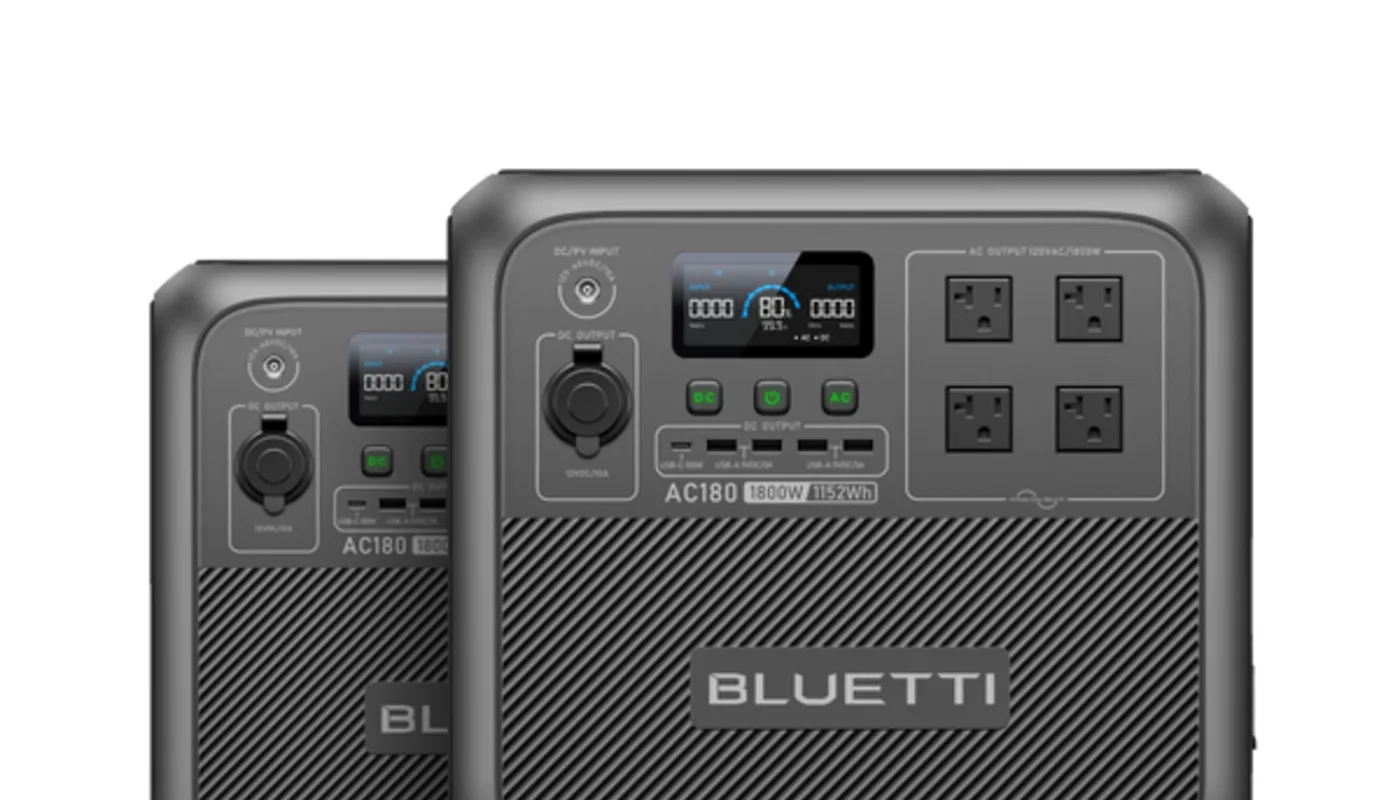
Quick decision
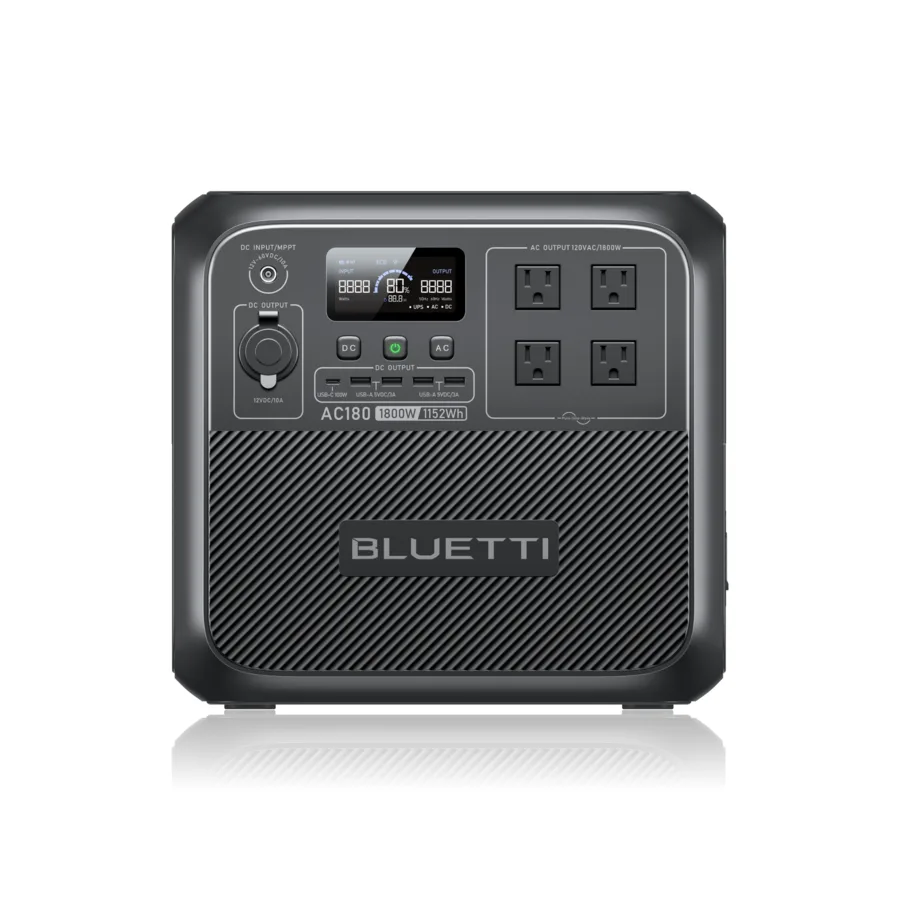
The AC180's 1,152 Wh battery and 1,800 W AC output make it a practical short-duration backup for communications, lighting and selected appliances. It is not a whole-home generator, and high-heat loads can consume its stored energy quickly.
Start with watts and watt-hours
Watts describe how much power a device needs at one moment; watt-hours describe stored energy. Divide usable watt-hours by the device's average watts for a rough runtime, then reduce the estimate for inverter losses, startup surges, temperature and battery condition.
Good backup priorities
Prioritize a modem, router, phone charging, LED lighting, medical devices within their approved power requirements and a refrigerator if its startup surge is compatible. Confirm critical medical loads with the device manufacturer and maintain a separate emergency plan.
Loads that drain it quickly
Space heaters, kettles, hair dryers and cooking appliances may fit under the output limit but can empty a 1,152 Wh battery rapidly. Power-lifting mode does not increase stored energy and may not suit every appliance.
Charging plan
BLUETTI lists up to 500 W solar input alongside AC and vehicle charging options. Solar recovery varies with panel rating, angle, weather, shade and charge-controller limits, so plan from conservative daily production rather than the panel's label alone.
Bottom line
Use the AC180 as a managed backup for a defined list of essentials. Write down each load, its startup behavior and target runtime before buying; shoppers needing multi-day refrigeration or electric heating should investigate a larger expandable system.
Scenario shortlist
Order reflects this guide's use-case discussion, not a laboratory performance score.
Sources
Affiliate disclosure
We may earn a commission from a qualifying purchase made through an enabled merchant link, at no additional cost to the reader.